I fell in love with Oscar Cásares’ writing when I read his novel Amigoland. No, the novel is not about Brownsville’s former shopping mall. It is about two stubborn older men who escape a nursing home and venture into Mexico.
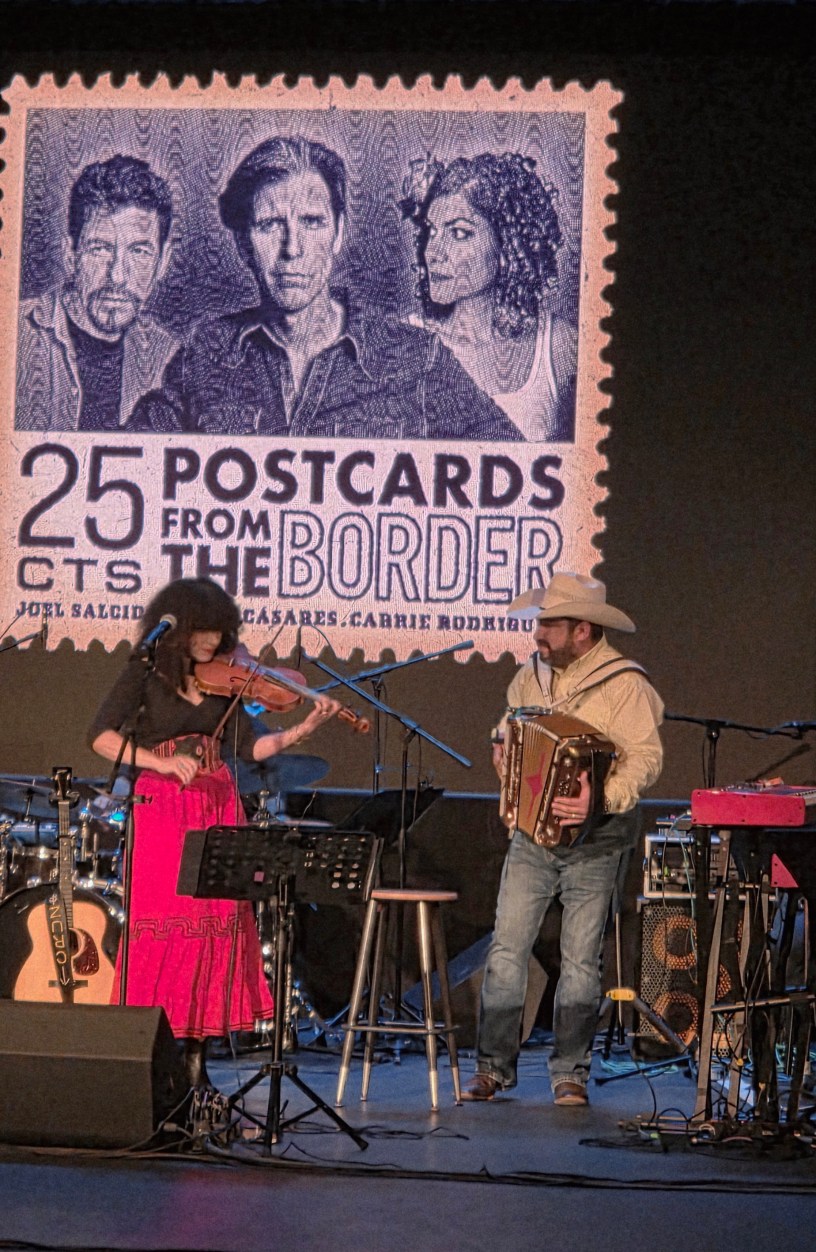
On Thursday, April 3rd, 2026, Cásares returned to his native Brownsville. He performed in a multimedia production called Postcards from the Border. He was joined by singer Carrie Rodriguez and a group of talented musicians at the Texas Southmost College Performing Arts Center.
I don’t know about you, reader, but I am tired of seeing people’s faces when I tell them I live in the Rio Grande Valley. Countless times during trips, with the typical conversation starter question: Where are you from? It all quickly unravels. The story the media has shared for years surfaces. A few have said good things. A few others have shared good experiences, especially in South Padre Island. But the majority believes we live in a war zone. Others believe we don’t even know how to speak English!
I’ve had people say to me they don’t visit the Border out of fear, or because they don’t speak Spanish. I’ve also been told by visitors who’d driven here that the Valley is at the end of the world. That we are in no man’s land. When I lived in Matamoros, I was considered too American in the rest of Mexico. When I moved to Brownsville and Harlingen, I realized that people from the Valley are considered too Mexican for the rest of the rest of the country. Bottom line: the area is like a whole other country! Funny, because that happens to be Texas’s tourism tagline, but it certainly applies only to the Valley.
So much bad press, so many of our kids leaving in search of something better. It takes a toll. I often find myself wishing to live somewhere else as well. I get frustrated with the actions of some Valley folks and our reckless driving. That’s why Postcards from the Border was a return to faith in my culture and in the people of the Valley.
Postcards from the Border combines the spoken word by Cásares, music composed and performed by Carrie Rodriguez, and photography by Joel Salcido. These talented artists have ties to the Valley and South Texas.
Postcards from the Border began with the song Cumbia de la Frontera. It is a folksy mix that, in my opinion, embodies the Valley. We relate accordion music to the music of the Valley. But I did not grow up listening to Conjunto or Tejano music. This makes it difficult to connect. Carrie’s songs awakened my senses and stored memories. Another song, Miles Away, revived feelings from our RV travels along the border especially in the Big Bend region.
Cásares reads postcards he sent to his 10-year-old daughter during a road trip he took with Salcido some five years ago. He is a UT professor, so his oratory is articulate and commanding. Sometimes, it’s even emotional. I was emotional when someone in the videos reiterated that the Valley is like its own world. Expressed how nestled between two nations, we gave voice to our own distinct identity. The comment rang true.
In an interview with NPR News, Cásares said, “I think when we took this trip, we had a very clear sense of the story we were looking for. We understood the story that the Trump administration was telling about the Border. Our mission was to go out and find that other story, because we’d lived it.”
In the same article, author John Burnett writes: “The Postcards production chronicles all manner of life along the international divide: a Mexican family playing in the river under the suspicious eyes of a U.S. immigration agent, a transgender singer in El Paso who “crosses a border that’s inside of her,” and a father and son from Africa cleaning windshields for tips trying to survive in a Mexican border town. There’s also a miracle-seeker who treks to a Catholic shrine in Texas carrying a 3-foot wooden Jesus, and a visit to the graves of Casares’ grandparents with his cousin Eddie.”
The performance came at the perfect time for me. I shed tears, my heart warmed, and I was reminded how admirable our ancestors were. It reminded me of the challenges my family faced over 200 years ago when they settled in a semi-desert frontier north of the Rio Grande River. It brought memories of stories I’ve heard about migration, farm work, parenting, racism, injustice, and all our people have endured.
When I walked out of the theater after the show, I talked to a couple of people I know. They expressed their wish that their sons and daughters had seen the show. I felt the same way. It saddened me because my sons live far away. But the show renewed a pride I had not felt in a while. And now, I even have some music to serenade my pride.
The show ended with a performance of the famous Vicente Fernández Mariachi song Volver, Volver. The Valley’s own accordion prodigy, Juan Longoria Jr., accompanied Carrie and the rest of the musicians. It was a magnificent ending to a nostalgic evening.
Read the full NPR article Postcards from the Border aims to Challenge Skewed Portrayal of U.S. – Mexico Border, here.
Watch and listen to Carrie Rodriguez sing three of the songs performed during the show here.
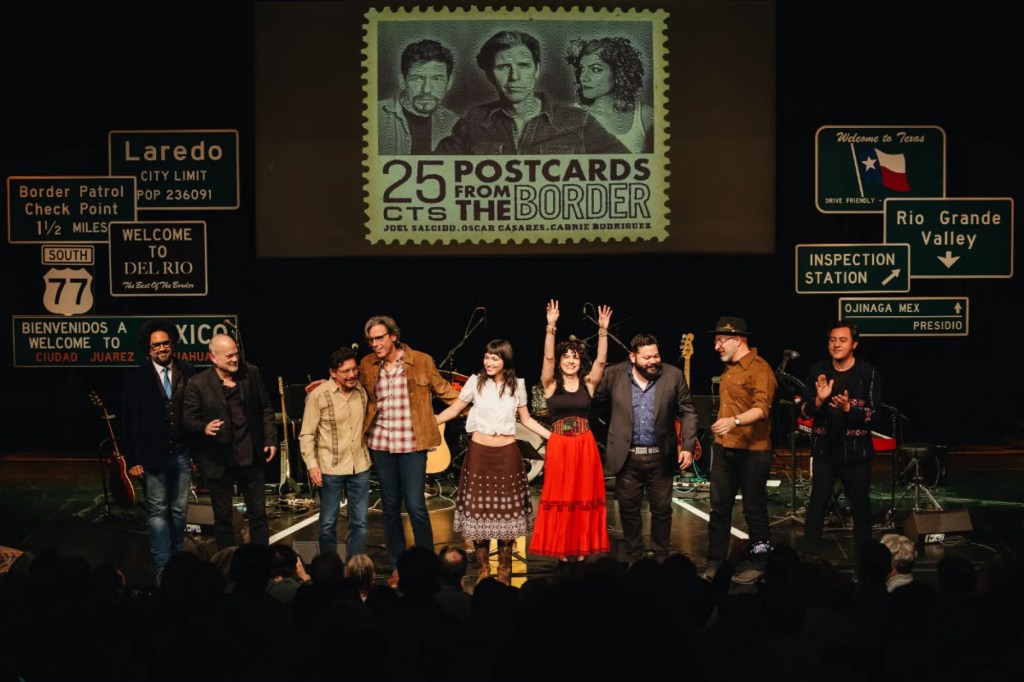
UT English Professor Oscar Cásares and photographer Joel Salcido adapted the story of their journey along the Rio Grande — originally chronicled in print in Texas Monthly — into a new stage production commissioned by Texas Performing Arts.
The project, inspired by Cásares’ desire to share his border experiences with his daughter, was brought to life with music by UT’s 2024–25 songwriter-in-residence, Carrie Rodriguez, and was narrated by Cásares alongside Salcido’s photography. The work premiered at McCullough Theatre with two sold-out performances in January, 2025 and the creators hope to tour the work in other venues across the country.
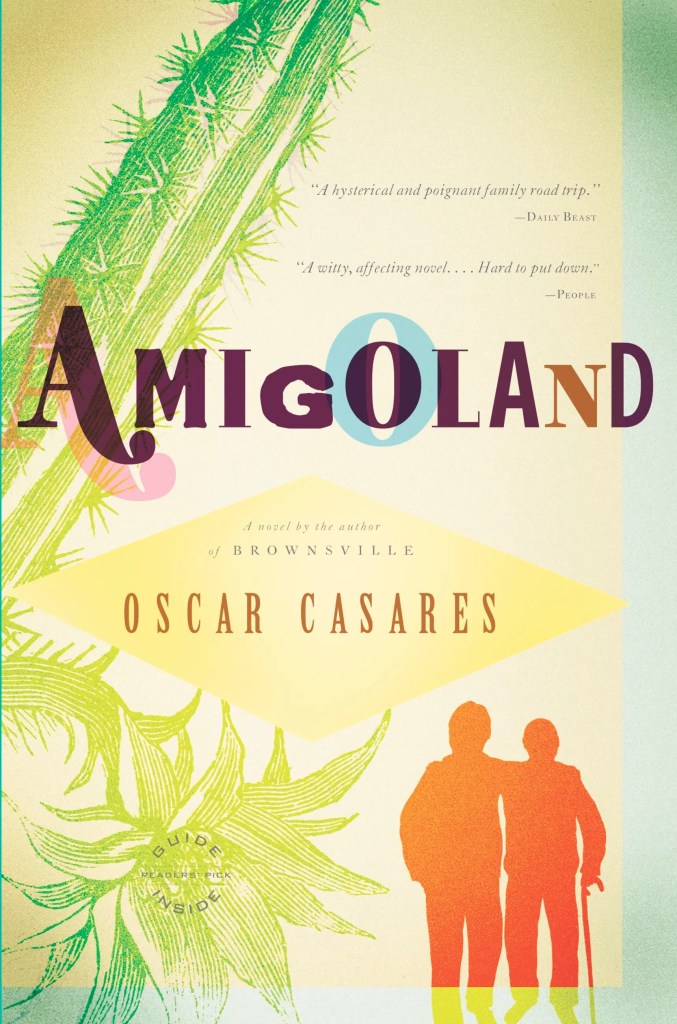
Oscar Cásares is the author of Brownsville, a collection of stories that was an American Library Association Notable Book of 2004, and is now included in the curriculum at several American universities, and the novel Amigoland. He is the recipient of fellowships from the National Endowment for the Arts, the Copernicus Society of America, and the Texas Institute of Letters. A graduate of the Iowa Writers’ Workshop, he teaches creative writing at the University of Texas in Austin, where he lives. Goodreads.
 La Vida Valley | Living la Vida Local