
In the late 1990s and early 2000s, my husband and I ran a tour company specializing in trips to Mexico. Monterrey was our bestseller with one-, two-, and three-day tours.
Because of increasing uncertainty and troubling news from Mexico, we decided to close our company. We kept traveling, just not to Monterrey, until this past weekend. For the first time in years, we took a comfortable bus from the McAllen station. We traveled 151 miles to visit Monterrey. The city is known as La Sultana del Norte. Sultana is a Spanish nickname of Arabic origin. It means ‘queen’ or ‘the beautiful wife of a sultan.’
The nickname fits Monterrey well. The city leads northern Mexico’s economy and serves as a center of industry. One of its six municipalities, San Pedro Garza Garcia, is ranked as the wealthiest in Latin America. These six municipalities comprise Monterrey’s metropolitan area. While Monterrey faces challenges like extreme weather and water shortages, a cool front made our visit pleasant this time.
There’s a new flight from McAllen to Monterrey. But if you’re looking for a lower budget option, I recommend taking the bus from McAllen. The cheapest round-trip flight I found from McAllen with Aerus, a Mexican airline, was $250 per person. Flights with United Airlines and American Airlines cost about $900 per person round-trip.
If, like us, you haven’t visited Monterrey in a while and are considering a trip, consider this potential itinerary. Our journey began with a simple drive to the McAllen bus station.
Day 1.
Friday. We drove to the McAllen bus station and parked in the nearby parking garage. The cost is $5 per day for a safe and shaded space. Our departure time was 8:30 am, and our senior discount round-trip tickets totaled $84. Tickets are available online or in person. Seats are selected at the time of purchase. Details at the end of this story.
The bus stops at the border for American citizens to get tourist visas if needed. The price is about $60 per person, cash only. They accept pesos and dollars. Travelers must present a passport. Mexican customs and immigration staff are friendly and helpful in filling out forms. Once stamped, you’re ready to go—the bus heads straight to Monterrey. No stops. Some people prefer to get their tourist visas in Nuevo Progreso ahead of time. That is always an option.
The bus is clean and comfortable. It has reclining seats and a large screen for movies or shows. Bring earphones, since they will not always be available. I appreciated the separate men’s and women’s bathrooms. The bus was nearly full and quiet. We did not watch movies. We wanted to see the road we knew so well and missed. Five hours later, at 12:30 pm Monterrey time, we were in our room at Hotel Krystal in downtown. Monterrey is on standard time. Only Mexican border towns observe daylight saving time.
We were there during the popular 3-day music festival PAL NORTE. Looking ahead, Monterrey is preparing to host the World Cup in June and July of this year. Hotel rates will certainly increase. Conveniently, the hotel is within walking distance of many of the “must-see” landmarks in downtown. It is across the street from the Macroplaza. In the plaza, there are multiple government buildings, museums, the governor’s palace, a theater, and a public library. The plaza is known for its beautiful Neptune fountain and incredible size.
The Macroplaza is the main plaza in the heart of the city. It is the fifth-largest plaza in the world with an extension of 4,305,564 square feet. Many old buildings were demolished to build this plaza in the 1980s. There is a tall terracotta monument called Faro del Comercio (Lighthouse of Commerce), designed by renowned Mexican architect Luis Barragán.
Our first stop after checking in was at El Rey del Cabrito, a tradition in Monterrey since 1986. It was as good as expected. Cabrito has increased in price, though; the paleta (shoulder) plate costs about $39. It is served with charro style beans, tortillas, lettuce, tomatoes, and onions.
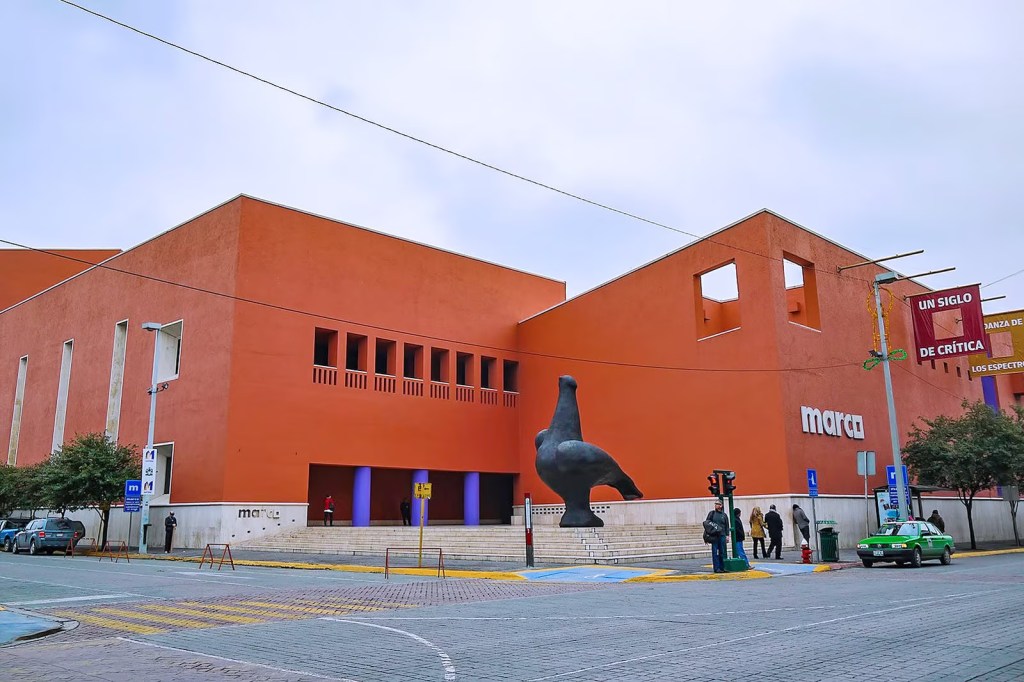
After this great meal, we walked to the Museum of Contemporary Art of Monterrey (MARCO). There, we admired Latin American Art from the FEMSA Collection. FEMSA is a multinational company headquartered in Monterrey. It is known as the world’s largest Coca-Cola bottler. The company also operates OXXO, the largest convenience store chain in Latin America. The senior admission cost was 140 pesos (about $9) for both of us. The space itself is worth the visit. The building, designed by Ricardo Legorreta, is ideal for any exhibition. The museum features a museum and coffee shops. It is closed on Mondays and offers free admission on Wednesdays and Sundays.
After our museum visit, we returned to the hotel for a siesta. When in Mexico…
At 5:30 pm, refreshed from our break, we walked .75 miles to the Museum of Mexican History. We enjoyed a tour of the Paseo Santa Lucía. The sun was setting, and cafe lights were slowly lighting up, swinging in the soft, cool breeze. The round-trip guided boat ride takes an hour. The paseo connects the Macroplaza with the Parque Fundidora. Both locations great for exploration. Passengers disembark at any of these locations and return at any time before 8:00 pm. The cost is 50 pesos for seniors, for a total of 100 pesos (about $6) for both of us. It’s an unbeatable price for such an enjoyable experience.
As the evening set in, the place became even more magical. We found a waterside table at the Tenerias restaurant and relaxed after a full day. The food was OK, but the ambiance was romantic and serene. It was just what we needed after a long day. On our way back to the hotel, we walked through the Barrio Antiguo. The area bustled with laughter from young patrons in Monterrey for the PAL NORTE music festival. The festival featured the American band Guns and Roses, the Valley’s own Grupo Frontera, among many other popular bands.
We wanted to stay longer and enjoy the cool breeze, but it was getting late. Guided by the golden haze over the cobblestones in the Barrio Antiguo, we found our way back to the hotel.




Day 2.
Saturday. Location is the main reason we chose Hotel Krystal. A Sanborn’s cafeteria is across the street. This was the place we walked to for breakfast this morning. Founded in 1903 by California brothers Walter and Frank Sanborn, it began as a pharmacy. It later evolved into a soda fountain, bookstore, bakery, and even a bar. The most famous location is the Casa de los Azulejos, in Mexico City.
I ordered the entomatadas (like enchiladas, but the sauce is tomato-based, no peppers). The plate comes with fresh fruit and coffee. It did not disappoint. We enjoyed the boomboxes blasting old Spanish ballads and CDs for sale. It felt like traveling in time, because the bar area hasn’t changed in at least 30 years.
We had a guided tour at the La Milarca Museum in San Pedro Garza García at 11 am. We called an Uber to get there. It is about a 10-minute drive from downtown. The museum is housed in a replica of the collector’s palatial home. It was designed by architect Jorge González Loyzaga within the beautiful Rufino Tamayo Park in San Pedro. I was mesmerized by the 14th and 15th-century Mudéjar-style ceilings, all assembled without nails or screws.
The collector, Mauricio Fernández Garza, served as mayor of San Pedro four times. He passed away last year while serving his fourth term. He was an avid collector with a passion for paleontology. He was part of the team that discovered one of the world’s most important fossil beds in Vallecillo, Nuevo Leon. The collection is impressive and well worth the visit. Tickets are about $6 per person and are available online. I highly recommend booking a private one-hour tour. They have them in English and Spanish.
Lunch in San Pedro sounded like a great idea, and we chose Campomar. We chose well. The menu is extensive, but my selection hit the spot. I had shrimp zarandeado-style, sautéed in a special spicy sauce. Campomar operates several restaurants across Mexico. It originated in Ixtlán del Río, Nayarit, and serves traditional seafood from that area. Entree prices range from $25 to $35 each.
What stood out to me was their digestivo, called Carajillo. The drink is composed of freshly brewed and cooled Espresso infused with Licor 43. A waiter mixes it in front of your table. Before mixing, he lights shredded cinnamon sticks and covers them with the glass he plans to use. The glass takes on a smoky flavor, enhancing the flavor of the other ingredients. He also adds a few coffee beans. I only took a sip of my husband’s drink; it was strong but delicious. I could not take all that caffeine unless I had plans to climb the Cerro de la Silla!
Next door to Campomar is the modern shopping center Arboleda and the JW Marriott Monterrey Valle. Not much further is the Palacio de Hierro for a high-end shopping experience. Visitors find name brands such as Max Mara, Dolce & Gabbana, Burberry, Valentino, Carolina Herrera, Ferragamo, Dior, Chanel, Prada, Fendi, and more. San Pedro is more like Dallas or Houston than like Mexico City. Prices are higher than in Monterrey. Downtown is in the Monterrey municipality, not in San Pedro. We came by bus, so to splurge a little. Cheers to traveling on a budget!
After a day overloaded with creative beauty, we went back to the hotel for a good night’s rest.


Day 3.
Sunday. After a good breakfast, we walked back to the Museum of Mexican History for a visit. In Mexico, museums are free on Sundays. A good number of people and families enjoyed modern curated exhibitions housed in a dynamic space.
From the museum, we booked an Uber to the new Salón de la Fama del Beisbol Mexicano (Mexican Baseball Hall of Fame). It was formerly located within the Cuauhtemoc Brewery – a place popular with our tour patrons. It is now housed in a spacious, wonderful location. Along with memorabilia and portrait plaques, visitors find a mini diamond replica for practicing baseball skills. Batting and pitching cages are also available at no extra cost. A highlight is the library, where children play games and read. Books can be checked out for a few days, just like in any other library.


The modern building’s design was inspired by the legendary Maestranza, a massive iron-and-steel foundry. This plant produced over 100,000 tons of steel annually before declaring bankruptcy in 1986. The steel plant was founded in 1900 as the Compañía Fundidora de Fierro y Acero de Monterrey. It was the first in Latin America. The cost for two seniors to visit is 120 pesos ($7.50).
The Hall of Fame is inside the Parque Fundidora (Steel / Iron Foundry). The park opened in early 2001 and covers 280 acres. It features green spaces, walking trails, the riverwalk, an aviary, a concert hall, and a couple of hotels. Holiday Inn Parque Fundidora is a great choice.
The weather was ideal for a late-March weekend. Upon leaving the hall of fame, we walked along the waterway, enjoying the blooming trees and shrubs. All that baseball talk made me hungry for an American-style burger or hot dog. We soon found a hamburger place. The hamburger was Mexican-style, with the patty more like a milanesa than a beef patty we’re used to. But still very good.
We took an Uber back to the hotel for a well-deserved siesta. It was our last night in Monterrey. We went out later to the shopping strip one block from our hotel. La Calle Morelos. This area is pedestrian-friendly and has a multitude of shops and restaurants. We couldn’t resist checking out the leather boots and belts. It was getting close to nine, closing time, when my husband paid for some great-looking leather boots. Their soft, dark brown leather and style made him decide. The price was around $70, so it was one of those purchases we couldn’t pass up. Cheaper than two cabrito meals!
Day 4.
Monday. Today we had the buffet breakfast at the hotel because we were traveling back home. Great buffet offering a variety of fruit, yogurt, and an omelet station. Couldn’t pass on the traditional and delicious Mexican dishes, such as menudo and chicharrón en salsa verde. Great coffee, green, carrot, and orange juice, plus pan dulce. I love how buffets give us the opportunity to try things out.
An Uber took us to the bus station, where we boarded our bus. We had front-row seats with plenty of legroom. There is one main issue with the return trip to the United States. One never knows how long the line at the bridge will be. This time, the line took about an hour and a half. If you go, make sure to pack snacks, drinks, and a blanket or jacket. The bus does not stop between stations. At the border, passengers get off the bus with all their belongings to go through US Customs and Immigration. The bus is inspected too. Once it is ready to continue, the driver picks up passengers and continues to the McAllen bus station.
Visiting Monterrey is more than a vacation for us. It is a time to reminisce about our families. My mother and my husband’s maternal grandmother were born in a nearby community called Pesquería Chica. Founded by Spanish colonizers in 1669, near the abundant Santa Catarina River. The town’s soil is ideal for producing clay, block, and Spanish tiles. But in 2016, Kia Motors opened an assembly plant, and since then, the town has been known as Pescorea! We were told there is an important Korean community due to the presence of 270 plants in the automotive, technology, and steel industries.
Things have changed, and we have to adapt to the times. We were pleased to experience a thriving, modern Monterrey. The city will soon boast a monorail connecting all the important sites, and its subway system continues to expand.
This is what our weekend getaway to Monterrey looked like. The weather was important because strolls and rides would not be as enjoyable in the heat. Some friends say they don’t mind the heat. We do, so we plan carefully and travel during the cooler months.
We exchanged pesos before our trip for museum admissions, tips, and anything we wanted to buy from street vendors. Everything else you can pay with a credit card. Uber works well and is an affordable service. Our rides never exceeded $10. Monterrey is not touristy, so most signage will be in Spanish except in San Pedro.
Monterrey is a big city with a population of 6 million across six municipalities. Monterrey, San Pedro Garza García, Guadalupe, Apodaca, San Nicolás de los Garza, and General Escobedo.
Important to note that the bus coming into Monterrey from McAllen will make two stops. I recommend getting off at the first stop, which is known as la “Y” Griega station. (Y) because the station is at the intersection of two major roads. There is a taxi station at this first bus stop. The Y station is smaller and cleaner, and about a 15-minute drive to downtown. Some main avenues are currently closed, so traffic can lengthen driving times.
For bus tickets, click here. We drove to McAllen and bought our tickets in person. The Omnibus de Mexico staff are helpful and informative. The sooner you book, the better the opportunity of getting good seats.
I hope you enjoyed my story. If you have comments or suggestions for visiting Monterrey, please comment in the comments section.


